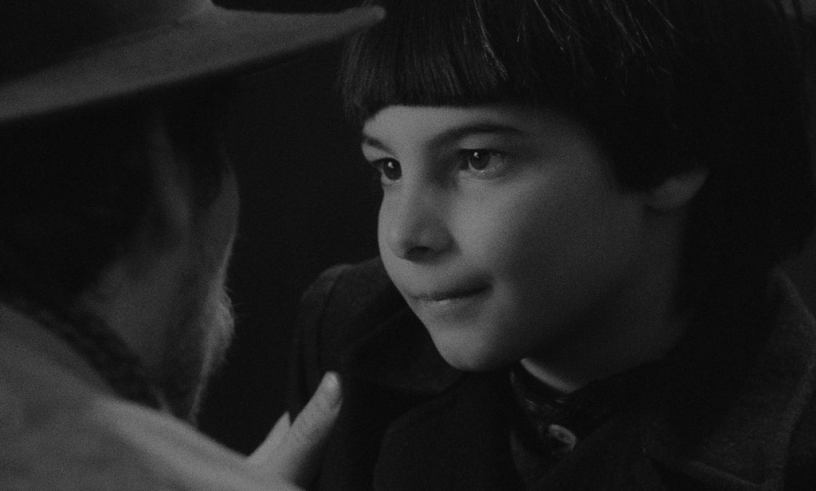
It’s a Hungarian detective movie.
Szürkület, and good luck pronouncing that, is part of a new series I want to start here at How About Notflix and it’s not because I’m tired of trying to keep up with modern releases and just decided to say screw it. That too. But I wanted to branch this blog out and watch more movies from older eras, and I thought what better than to include a new kind of release. The rerelease.
Because there are a ton of movie companies that have popped up over the last ten years or so dedicated to finding, remastering, and rereleasing lost classics. I recently picked up a Blu-ray for a 1959 Italian noir film I’m looking forward to checking out, but more on that at a later date. Today’s film is Twilight, a 1990 Hungarian detective movie directed by György Fehér which was his second last movie before his 1998 adaptation of The Postman Always Rings Twice. The film was rereleased via Arbelos Films using a 4k restoration created by the National Film Institute.
You can watch the original here.

The further I get away from Twilight the more I find myself appreciating it. The film follows a detective in rural Hungary on the search for a serial killer who has recently murdered a string of children. The police have what they think is an easy suspect and are ready to declare him guilty when the guy goes and kills himself. While the police are willing to call it a day and close the case, our protagonist isn’t satisfied with the answers they’ve been given. After being pulled from the case he continues his investigation in a less official capacity.
If this plot sounds familiar it’s because it was based on the book The Pledge: Requiem for the Detective Novel, which has been adapted numerous times over the last seventy years including in 2001 as the Jack Nicholson movie “The Pledge.”

The detective finds himself on a manhunt for an individual known only as The Giant, a mysterious figure who lures children and plies them with chocolates. Can he figure out who The Giant is and stop them before they claim another victim? Who knows, this is 1990s-era Hungarian film. It could go as dark as your mind can imagine, and probably even darker.
György Fehér referred to this movie as a slow burn, and boy howdy was he not lying. Twilight is a slow burn in the sense that if you asked drying paint what watching drying paint was like, this is what it would show you. Which isn’t to say the film isn’t beautifully shot or eerily haunting throughout. The town is constantly covered in an oppressive fog that creates for some intensely dramatic scenes, and seems to question the police’s ability to see the bigger picture.

The camera often lingers uncomfortably wrong on very close shots of people’s faces, and eventually it felt like the film wanted the camera to be its own character. Like the audience is taking part as a detective helping solve the mystery. When the detective is asking people questions, we’re supposed to spend a little less time focusing on what the characters are saying and more time studying their facial features and looking for clues.
And the camera goes all over the place, less interesting in the characters who inhabit this town and more interested in surveying the landscape. Shots often linger after people have walked off-screen for 30+ seconds before moving on, characters talk with big long breaks between sentences, almost giving time for us to really draw in everything they say. People don’t act like you expect people to, and it doesn’t feel like it’s an act put on for the camera or the result of bad actors overacting.
It’s a captivating film that I would never allow into mainstream circulation. Let me put it this way; if you found Eraserhead too boring and “pointless,” you’re going to be falling asleep within about 20 minutes watching Twilight.
Rating: A-
 How About Notflix